What to Wear for Family Pictures: Colors and Outfit Ideas
Choose the location first, then pick three or four colors that stand out gently against it. Start with one anchor outfit, spread its colors across the family, skip logos and neon, and test everything in a phone photo before the day.
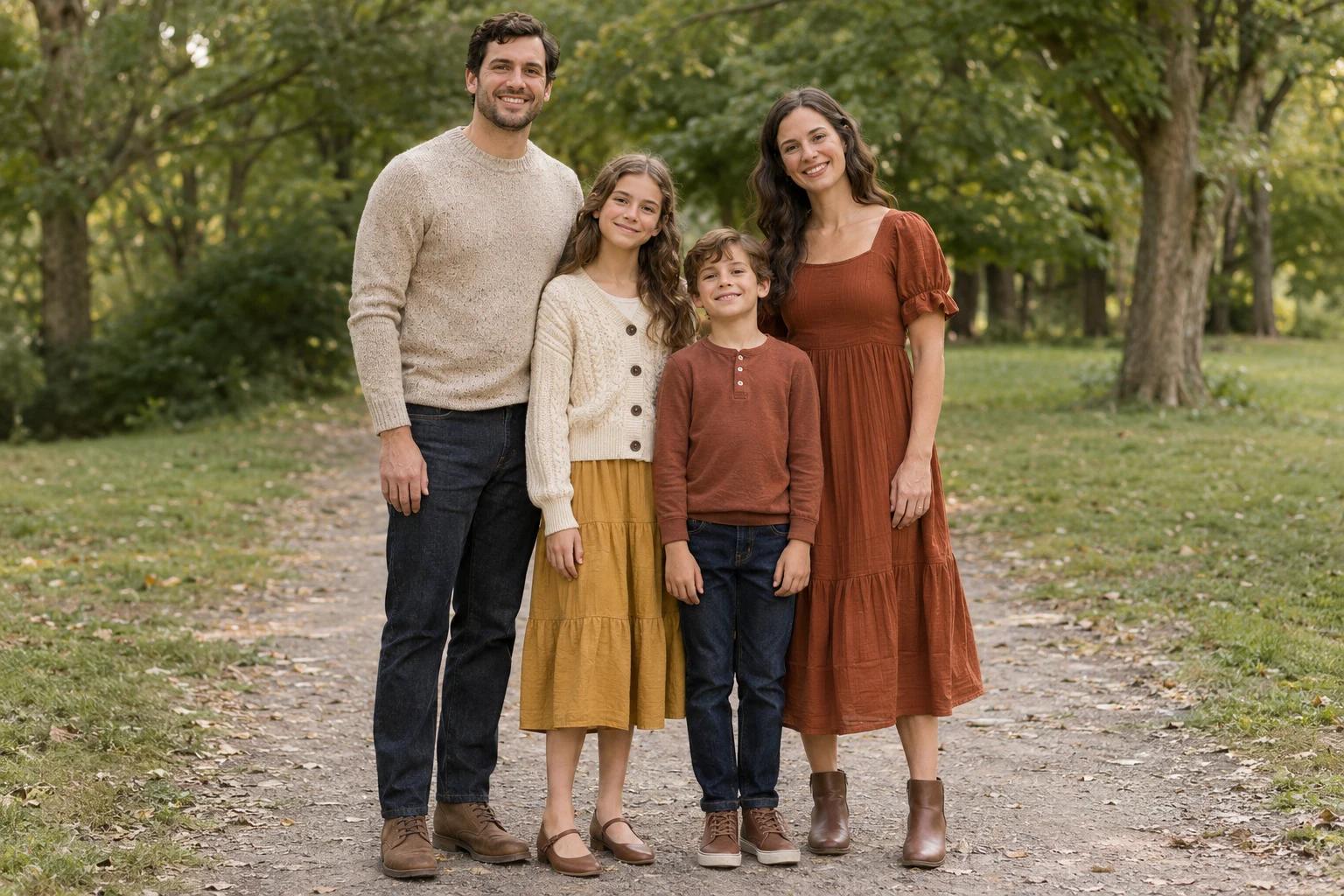
Family photo outfits usually go wrong in one of two ways. Either everyone wears the same white shirt and jeans, and nobody looks like themselves, or everyone picks separately and the bright orange hoodie is the first thing you see in the picture.
The fix sits between those two. You can skip the matching clothes and the stylist. What helps is a small color palette and one outfit to build around, plus an evening to test it all before the day.
Start with where the picture will be taken
Choose the location before anyone opens a closet. The background counts as another person in the picture, and it has a color too.
Clothes that match the background make people fade into it. A green shirt can disappear against summer trees, and a tan sweater can do the same on a beach. Look for colors that sit near the setting without copying it. Rust and navy stand out gently against green. Soft blue and white work on sand.
Indoors, look at the sofa, walls, and curtains. If you're shooting on a patterned couch, keep clothes simple. If the room is plain, you have more room for pattern. For more on shooting at home, see these ideas for a small apartment and for rainy-day pictures indoors.
Build a palette of three or four colors
A simple formula works for almost any family:
- One or two neutrals for most of the clothing, such as cream, navy, gray, tan, or denim.
- One main color that shows up on a few people.
- One small accent for a scarf, a child's dress, or a pair of socks.
Then spread those colors around. If Mom is the only person in rust, she'll look separate from the group. Put rust on a child as well, and the picture holds together.
Here are some palettes to start with:
| Setting | Neutrals | Main color | Accent |
|---|---|---|---|
| Park or woods | Cream, denim | Rust | Mustard |
| Beach | White, navy | Dusty blue | Soft coral |
| Autumn leaves | Navy, tan | Forest green | Burgundy |
| Snow or winter city | Charcoal, navy | Deep red | Camel |
| Living room | Oatmeal, denim | Sage | Terracotta |
| Spring garden | Ivory, light gray | Lavender | Soft yellow |
| City streets | Charcoal, cream | Camel | Deep teal |
| Studio or plain backdrop | Navy, white | Dusty rose | Gold |
Muted shades are easier to combine than bright ones, because they don't compete with each other or with faces. If your family loves bright color, keep it. Just give one or two people the bright pieces and let everyone else support them.
Build around one anchor outfit
Finding four outfits at once is hard. Finding one is easy.
Start with the piece that's hardest to match. That's usually a patterned dress, a child's favorite shirt, or the thing someone refuses to change. Pull your palette from its colors instead of the table, as long as they still stand out from your background, and dress everyone else around it.
Most families already own the rest. Check what's in the closet before you buy anything, and limit new purchases to the one or two gaps you can't fill.
Decide how dressy to go
Pick one level for the whole group and tell everyone before they choose. One person in a blazer next to someone in a hoodie looks like a mistake, even when the colors work.
Let the setting decide. Jeans, knits, casual dresses, and rolled-up button-downs suit a park or a living room. Dressier dresses and crisp shirts suit a garden or a studio. If you're unsure, aim for what you'd wear to a nice family dinner, because most people look and feel like themselves at that level.
Family picture outfit ideas you can copy
Family of four at the park, in autumn
- Mom: forest green midi dress, tan boots
- Dad: tan sweater, dark jeans
- Daughter: forest green cardigan, tan skirt, burgundy tights
- Son: navy henley, tan chinos
Parents and a baby at home
- Mom: oatmeal knit top, dark jeans
- Dad: sage button-down, sleeves rolled, dark jeans
- Baby: sage knit romper, bare feet
Family of five at the beach, early or late in the day
- Mom: white linen dress
- Dad: dusty blue linen shirt, navy shorts
- Oldest: white T-shirt, blue shorts
- Middle child: coral sundress
- Youngest: dusty blue shirt, white shorts
Three generations in winter
- Grandparents: charcoal coat and navy coat
- Parents: navy coat and deep red coat, both with dark jeans
- Kids: charcoal coat and deep red coat, one with a camel scarf
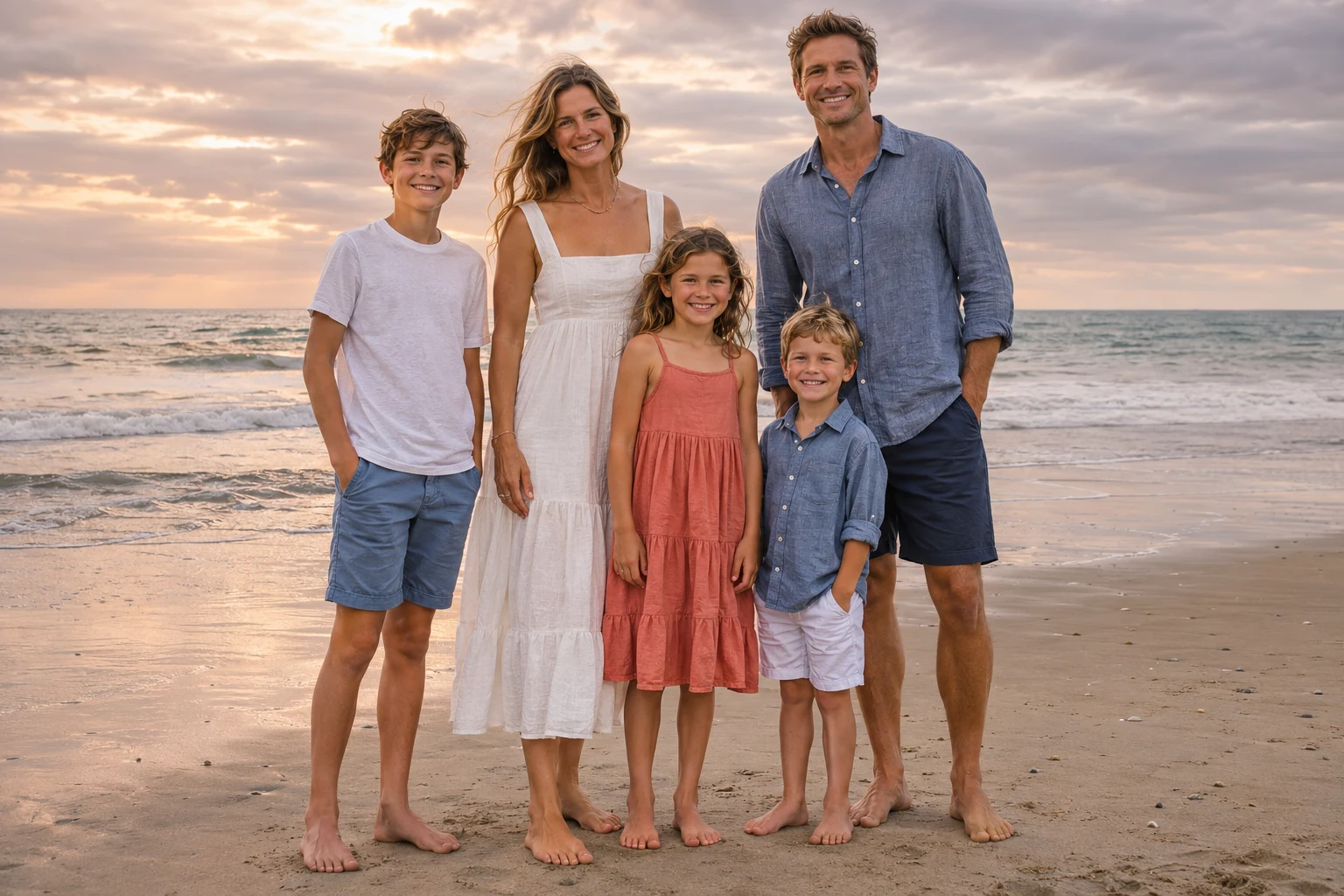
Notice that nobody matches exactly. Each person picks up one or two colors from the group, which is why they still look like a family.
What photographs badly
- Big logos and words. Eyes go straight to text, and a brand name dates the picture.
- Very fine stripes and tiny checks. These can turn into wavy, rainbow-like bands in a digital picture, an effect called moiré.
- Neon colors. They pull attention from faces, and in strong sun they can throw colored light up onto skin.
- All white or all black in hard sun. White can lose its folds and turn into a flat shape. Black can lose its detail. Both are fine in soft light, so save them for shade or a cloudy day.
- Clothes bought to fit "soon." Anything too tight or too big shows more in a picture than it does in the mirror.
Larger patterns are fine. Try to limit them to one or two people, and keep the people beside them in plain colors.
Dress for the season you're really in
Being cold or sweaty shows on faces long before it shows on clothes.
Spring: Bring light layers, because mornings can start cold. Keep spare shoes in the car if the grass is wet.
Summer: Choose linen and cotton, and avoid fabric that shows sweat, like gray jersey. Shoot early or late, when the light is softer and everyone is cooler.
Autumn: Knits, denim, and boots all suit this season, and darker colors look rich against the leaves. Layers also give you two looks in one session.
Winter: Coats are the outfit, so choose them as carefully as you would a shirt. Hats and scarves are an easy way to add your accent color. Just push brims back so they don't shadow anyone's eyes. Keep gloves off for the picture if you can, and put them straight back on between shots.
Adjust for the size of your group
Two or three people. Every outfit shows clearly, so details such as texture and fit matter more. One strong color is usually enough. These ideas for small families can help with the rest of the picture.
Four to six people. Check how the colors fall across the group and move people around so that the same color isn't all on one side.
Large or multi-generation groups. Don't try to control everyone's closet. Send out three or four colors and a few example pictures, and let each household choose from those. Give the group a simple rule, like "no logos and no neon," rather than a long list. Standing arrangements matter more at this size too, so look at these tips for people of different heights.
Blended families. Clothing can quietly help everyone read as one group. Mix the colors across households instead of giving each side its own. There's more on this in our guide to blended family portraits.
Dress for the people, not the picture
Babies: Soft, plain clothing with no scratchy tags tends to work best. Bring a second outfit, because you'll probably need it.
Toddlers and young kids: Let them run in it. If a child hates a collar, the picture will show it. Offering a choice between two approved shirts tends to go better than insisting on one. Dress them last so that they stay clean.
Teenagers: Let them choose within the palette. Teens who feel like themselves are easier to photograph, and that's worth more than a perfect match.
Grandparents and anyone with limited mobility: Comfort and easy movement come first. Make sure clothes sit well when seated, since many of the group's best pictures may be taken that way. Anyone who wears glasses can look at these tips on reducing glare.
Test everything a few days before
This step is easy to skip, and it catches most problems while you still have time to fix them.
- Lay all the outfits out together on a bed, near a window.
- Take a picture with your phone. Clashing colors are much easier to spot in a photo.
- Have everyone try their outfit on, including shoes.
- Ask everyone to sit down, raise their arms, and pick up a child. Look for gaping buttons, riding hems, and waistbands that dig in.
- Wash, iron, or steam what needs it, and hang everything up.
Then pack a small bag for the day: wipes, a lint roller, safety pins, a spare shirt for each child, hair ties, and a snack that won't stain.
Don't forget shoes and hair
Shoes show up in full-length pictures more than people expect. Scuffed sneakers can look fine with jeans, but one pair of bright white sneakers will stand out in a row of boots. Simple shoes in your neutrals are the safest choice, and bare feet can look lovely at home or on sand.
Keep hair and makeup close to how you normally look. Try anything new ahead of time, or save it for after the pictures. In ten years, you'll want to recognize yourselves.
When everyone can't be there
Good outfits don't help much when one person lives across the country. If you already have pictures of each person, you can create a combined portrait in our family picture generator. It works best with clear, well-lit photos. Results vary, so check that everyone still looks like themselves.
Missing a photo with everyone in it? Start with the pictures you already have.
Frequently Asked Questions
Should families match in pictures?
Not exactly. Identical outfits can look dated and make it harder to see each person. A shared palette of three or four colors looks connected, while still letting everyone look like themselves.
What colors look best in family pictures?
Muted colors such as navy, rust, sage, dusty blue, and cream are the easiest to work with. The best choice also depends on the location, so pick colors that stand out gently from the background.
Can we wear black in family pictures?
Yes, but be careful in harsh sunlight, because black clothing can lose its detail. It tends to look better in shade or soft light, and adding a lighter color or texture on someone else keeps the group from looking heavy.
Can more than one person wear a pattern?
Yes. Two patterns can work if they share colors and differ in scale, such as a large floral dress and a medium plaid shirt. Put someone in a solid color between them if you can, and take a test photo to make sure they don't clash.
Are jeans okay for family pictures?
Yes. Dark, well-fitting jeans without heavy distressing work well almost anywhere. Try to keep the washes similar across the family so that one pair doesn't stand out.
Make it with Family Pictures AI
See how each tool works, with examples, before you sign up.
Related articles
 Christmas Family Picture Ideas: Settings, Outfits and Poses10 min read
 Choosing a Baby Photo Background When the Outfit Has a Busy Pattern3 min read
 Best AI Tools to Fix Discolored Old Family Photos2 min read
 Restore Faded and Yellowed Family Photos with These Steps3 min read
 Photographing Handwritten Family Recipes Without Losing the Personal Details3 min read
 Family Picture Ideas: Poses, Places and Activities8 min read